How to rule out a look-alike site before you spend a tasking request
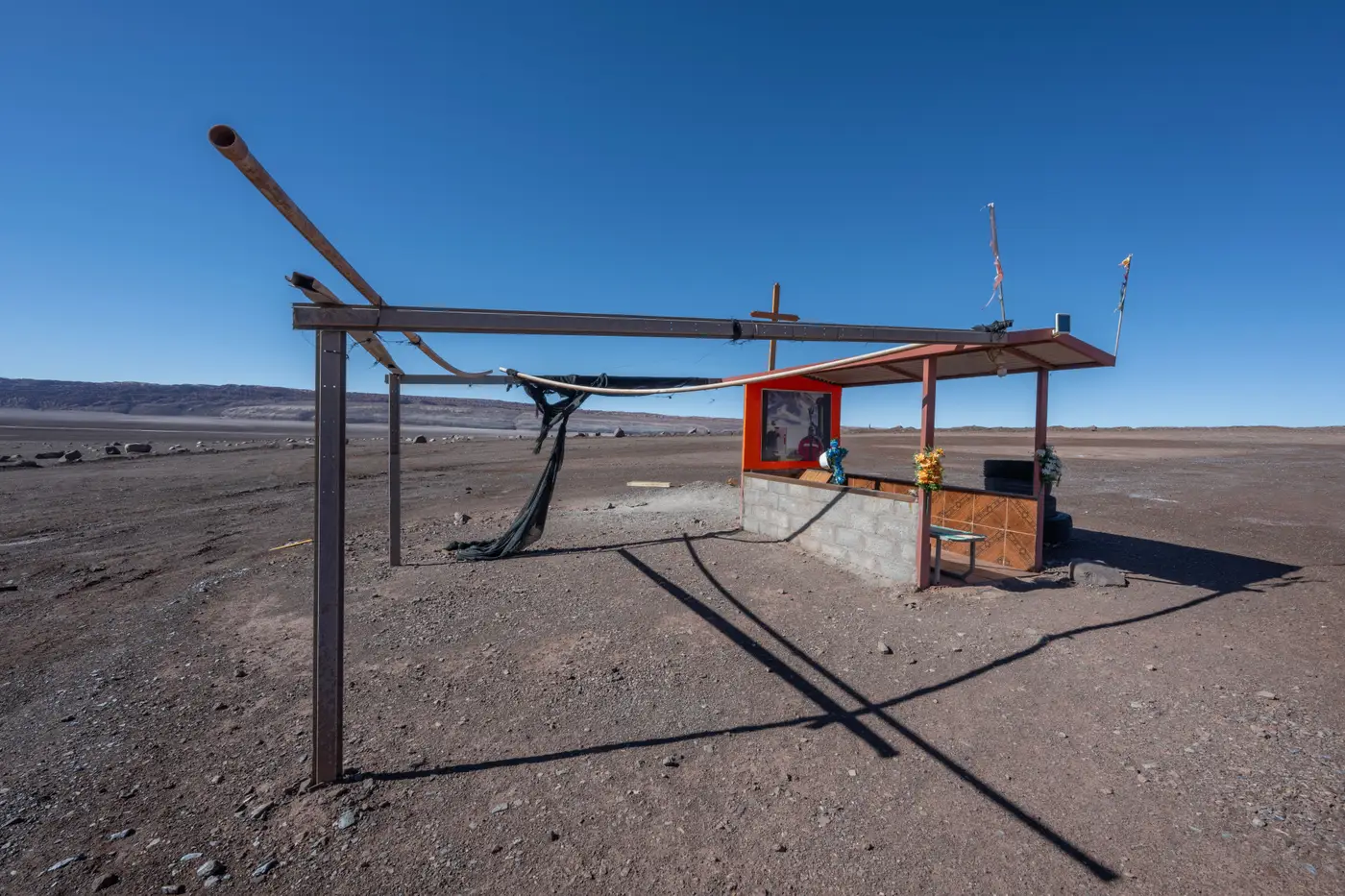
A similarity search against a known site rarely comes back clean. Run one query tile across a wide area and you'll get a ranked list of candidates, most of which share a roofline, a footprint size, or a texture with the reference, and nothing else. Before any of them justifies a tasking request, somebody has to sit down and decide which ones are worth the collection budget and which ones are a water tank, a grain silo, or a construction pad that happens to match on shape.
That screening pass is the part nobody writes procedures for. Here's what actually separates a real candidate from a coincidence.
What a similarity score doesn't tell you
The embedding model is matching on visual structure: edges, spacing, roof geometry, the arrangement of shapes relative to each other. It's good at that. It has no idea what a site is for, which means it will happily rank a tile highly because two buildings have the same footprint, even if one sits alone in a field and the other sits inside a perimeter fence with three support structures and an access road running to it in the pattern your reference site has.
A similarity score gets you a shortlist, and a person still has to work through it before anything above a low-confidence match goes near a tasking queue. A few things to check first:
- Context around the tile, not just inside it. Pull a wider chip than the matched footprint and look at what's adjacent: fencing, staging areas, vehicle presence, a spur road. A lone building with the right shape but none of the supporting infrastructure your reference site has is usually a pass.
- Shadow and look angle. If the reference image and the candidate were collected at different sun angles or off-nadir angles, shape comparisons get distorted. A structure that looks slightly off in proportion might just be a shadow artifact, not a different building.
- Seasonal and construction state. Vegetation cover, standing water, and bare earth from recent grading can all shift how a tile reads to an embedding model even when the underlying structure hasn't changed. Worth noting if the candidate and reference images are months apart.
- Count and spacing, when the site is a cluster. A single matching tile inside what should be a repeated pattern, say five identical structures in a row, with only one or two of the five actually present, usually means you're looking at something that coincidentally resembles one unit of the layout rather than the site itself.
A quick pass before you escalate
Work the ranked list top to bottom, but don't stop checking once the score drops. A genuine match sitting at rank 30 because of a bad crop or an unusual look angle is a more common failure mode than people expect. For each candidate worth more than a glance:
Pull it at full resolution next to the reference tile, side by side, not toggled. Check the footprint dimensions roughly match, not just the silhouette. Look at what's around it. Note the collection date if you have it, since it tells you whether a mismatch might be seasonal rather than structural. Then log a reason for every clear negative, even a one-line one, so the next person reviewing the same list doesn't redo the work.
That last step matters more than it sounds like it should. A broad-area run can return candidates in the dozens, and without a logged reason for each rejection, the same near-misses get re-opened every time someone reruns the search after a new collection pass.
The part this doesn't replace is the archive search itself. Somebody still has to pull every tile across the search area that resembles the reference in the first place, which is the actual bottleneck when the archive is too large to page through by eye. Mark one known site and get back the candidates across your whole area that are worth this kind of screening pass, and spend the tasking budget on the ones that survive it.