How to pick a good query tile for satellite image similarity search
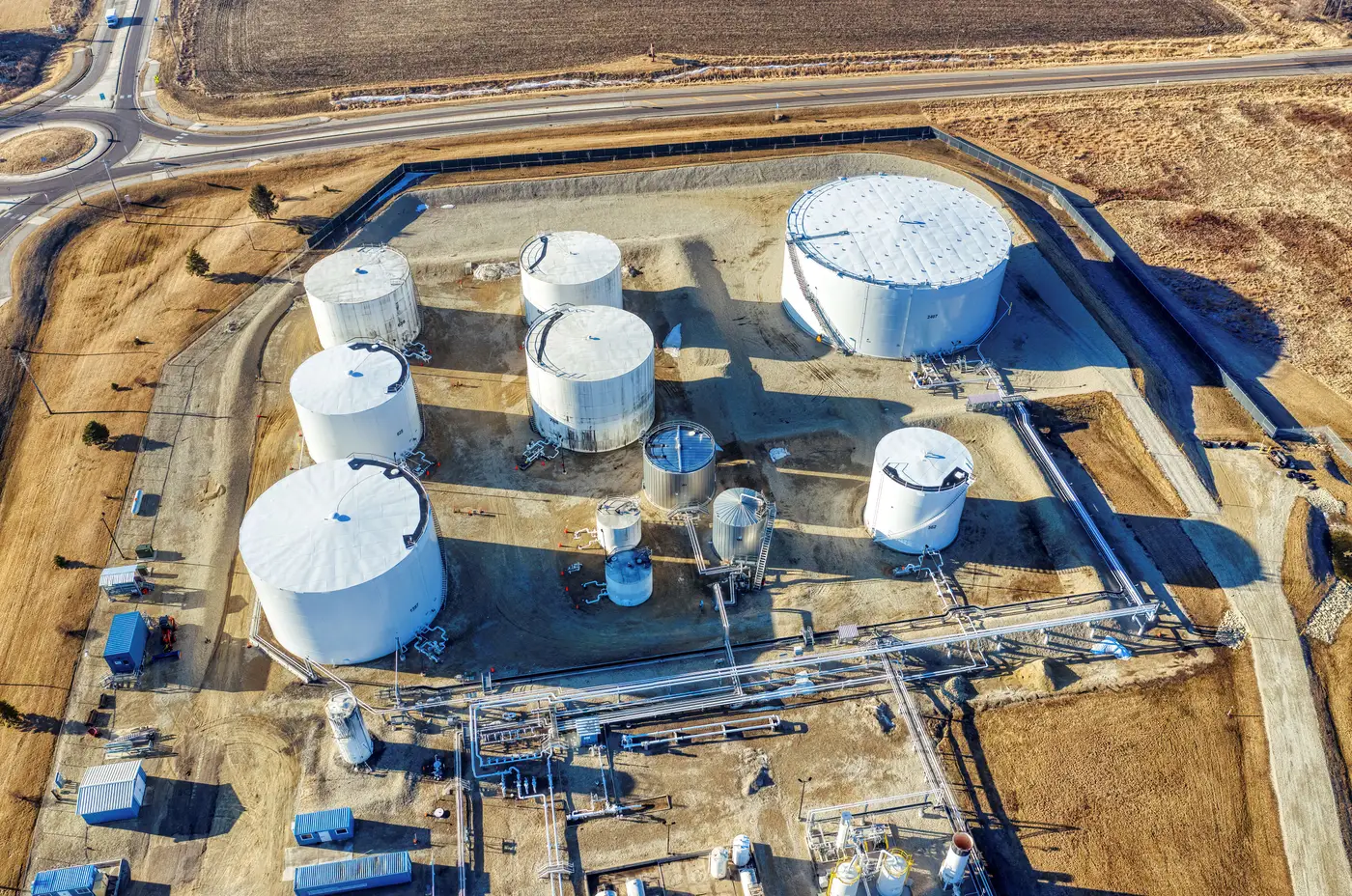
A query tile is the one image you're asking the system to go find more of. Pick a bad one and you'll burn your first pass on matches that share a color palette instead of a layout. Pick a decent one and the retrieval does something close to what you'd do by eye, just across thousands of tiles instead of a few hundred.
Here's what actually goes wrong most often, and how to avoid it.
Crop to the pattern, not the parcel
The instinct is to clip the whole facility: the fence line, the access road, the staging area next door. That's too much. A foundation model embedding a tile is encoding everything in the frame, including the stuff you don't care about. If your reference crop includes a parking lot and a tree line that happen to sit next to the structure you're after, the system will go looking for parking lots and tree lines too, and you'll get a return full of near-misses that share the wrong half of the picture.
Crop down to the feature itself, plus a thin margin. If the thing you're chasing is a particular roof shape, a dish arrangement, a berm pattern, or a vehicle layout, that's the frame. Everything outside it is noise the retrieval has to average in.
Match resolution and light before you match looks
A tile shot at 0.5 m and a tile shot at 2 m of the same structure encode very different texture and edge detail to an embedding model, even where your eye reads the two as the same shape. Texture and edge detail scale with resolution, and that's exactly what these models key on. If your known site comes from a high-resolution pass and your search archive is mostly coarser imagery, expect the top returns to cluster around tiles with similar grain and detail level, regardless of the actual footprint underneath. Where you have a choice, pull your query tile from imagery close in resolution to what you're searching against.
Sun angle and season matter for the same reason. A reference tile shot at low winter sun throws long shadows that carry as much shape information as the structure itself. Shadow geometry can be part of what makes a site distinctive, so know you're including it, and expect returns shot under very different light to rank lower even when the ground truth matches.
One tile rarely tells the whole story
If your known site has more than one example, a second structure of the same type a few hundred kilometers away, a training variant, an older build, pull a query tile from each and run them separately instead of averaging them into one crop. Sites built to the same spec still vary in orientation, paint, add-on structures, and wear. A single query tile encodes one instance of the pattern. Running two or three against the same archive and looking at where their returns overlap tells you a lot more than trusting one tile's ranking on its own. The overlap is usually where the real finds sit.
It's also worth keeping a short note on why each query tile was chosen. Hand a tile to someone else on the team six months from now, and "this one because the roof vent pattern is unusually clean" saves them re-deriving your reasoning from a thumbnail.
Crop and resolution choices like these are exactly what shape the results when you run a search where a single query tile and its matches is the whole organizing idea. If you're still doing this comparison tile by tile, it's worth seeing what that search looks like run properly across an archive.