Handling resolution mismatch between a query tile and archive imagery
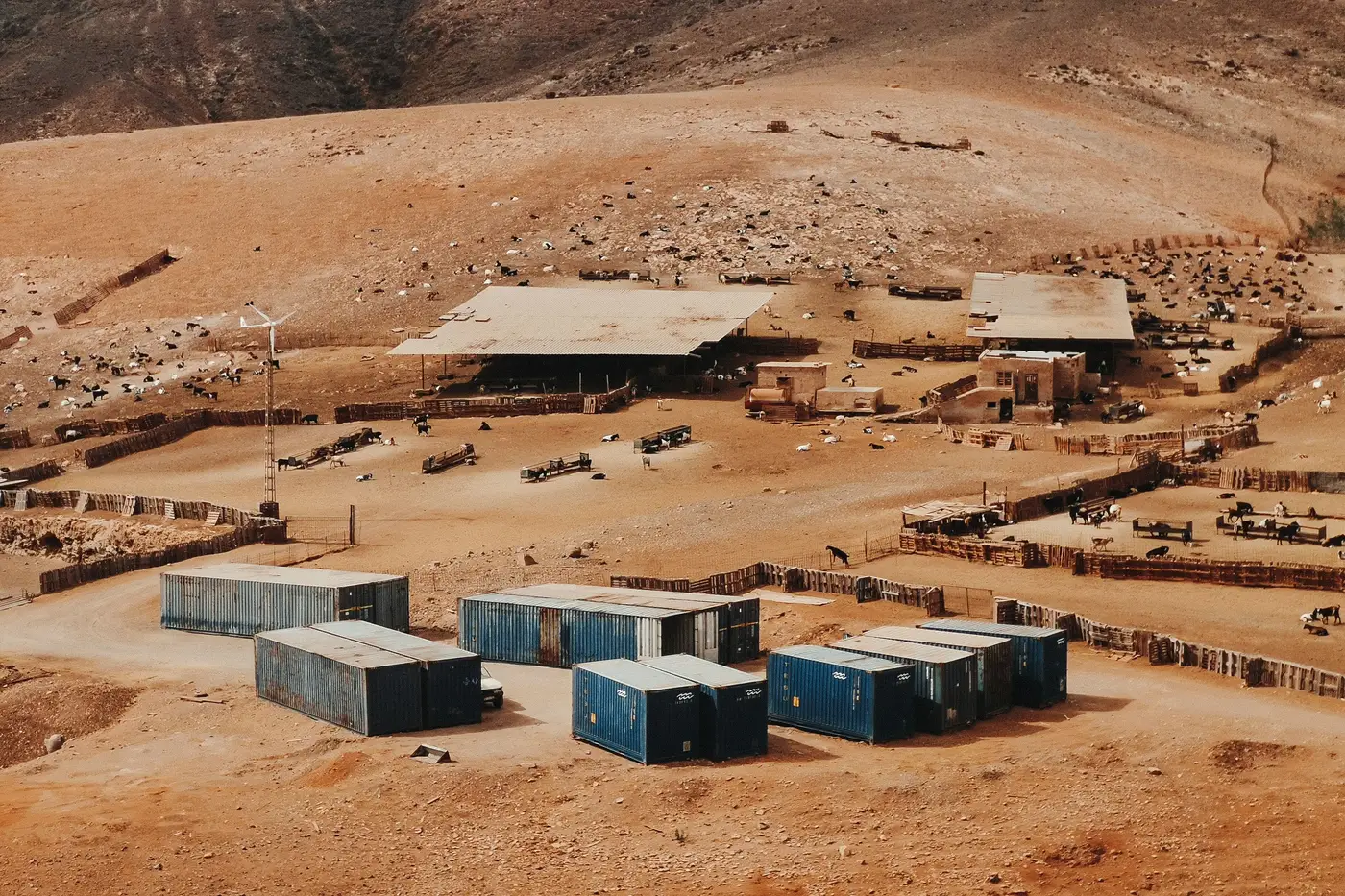
You've got a chip pulled from a 0.3m commercial pass, a known facility, a known layout, and you need to find anything like it across an archive that's mostly 1m and 2m. The moment you try to run that chip against the lower-res stack, something goes wrong that's hard to name at first. Matches that should be obvious don't surface. Noise does.
This is a resolution mismatch problem, and it's one of the more common reasons a broad area search returns the wrong candidate list before an analyst can tell why.
Why the mismatch breaks pixel-level matching
Ground sample distance sets how many pixels a structure occupies. A 40-meter building at 0.5m GSD is roughly 80 pixels across. The same building at 2m GSD is 20 pixels. Edges blur, shadows merge with rooflines, and small internal features (vents, bays, access roads) that defined the query tile simply stop existing at the coarser resolution.
If your matching approach relies on direct pixel comparison or template cross-correlation, this breaks outright. A 0.5m query tile and a 2m archive tile encode different amounts of structural detail, so the comparison is a detailed drawing set against a thumbnail of it, with the computer asked to confirm they show the same building. Upsampling the archive tile to match your query's pixel count doesn't fix this either. It interpolates guesses into pixels that were never captured, which makes the image smoother without adding any structure that wasn't there in the original data.
A lot of analysts hit this wall and conclude the archive source is unusable for the search. The archive is usually fine. The matching method is the wrong tool for a cross-resolution problem.
What holds up across GSD
A few things matter here, roughly in order of how often they get skipped:
Know the GSD of every layer before you search, not after. Metadata gets stripped or mislabeled more often than it should. If you don't know whether a source is 0.5m, 1m, or 2m, you can't reason about what detail survived.
Separate scale-dependent features from scale-independent ones. Counting roof vents is a 0.5m-and-better task. Footprint shape, overall site layout, the relationship between a main structure and its access road, the presence of a perimeter and its rough dimensions, these hold up much further down in resolution. Build each query around the features the coarser archive can resolve, using the detail that's unique to your source tile only as a tiebreaker once candidates surface.
Favor similarity scoring built on learned visual features over pixel templates. This is the core fix for cross-resolution search. A matching approach trained on imagery across many resolutions learns what a facility of a given type generally looks like, structurally and texturally, rather than memorizing the exact pixel arrangement of one tile. That's a fundamentally different comparison than overlaying two grids of pixels, and it's a big part of what makes a tool built around embedding-based similarity search usable on mixed-resolution archives instead of a single curated source.
Expect a confidence gradient, not a binary match. When your query is 0.5m and you're screening a 2m archive, treat results as candidates for a second look, not confirmed hits. The coarser the archive relative to the query, the wider that funnel needs to be before you start eliminating.
Don't mix resolutions silently in one scoring pass. If part of your archive is 0.5m and part is 2m, run them as separate passes or at least flag the GSD per result. A single similarity score across both will quietly favor whichever resolution happens to match your query more closely, which has nothing to do with whether the site itself is a real match.
Resolution mismatch isn't solvable in the sense of making a 2m pixel show detail that was never captured. What is solvable is matching on the features available at the resolution you have, using a search method built to generalize across GSD instead of one that assumes every tile in the archive was shot at the same scale as your query.
If you're running this kind of search by eye across a resolution-mixed archive right now, it's worth seeing what a similarity search built for exactly this problem looks like.