Clustering vs nearest-neighbor retrieval for satellite imagery similarity search
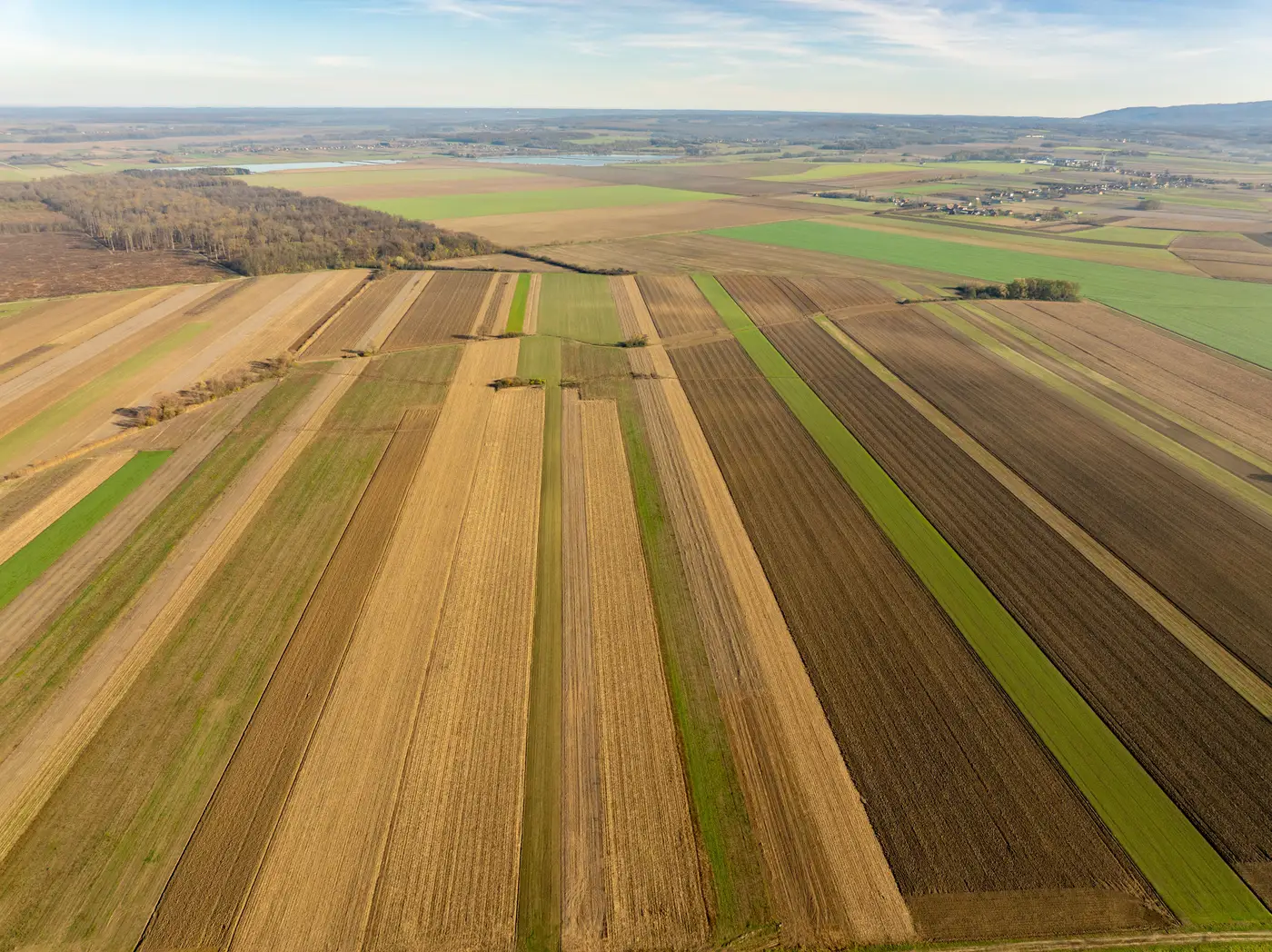
When you're hunting for every site that resembles one known facility across a region, there are two basic ways to organize the imagery: cluster everything into groups first, or run a nearest-neighbor search against a single query tile. They solve different problems, and picking the wrong one for the job in front of you burns a review cycle you don't get back.
What clustering actually gives you
Unsupervised grouping takes embeddings for every tile in your search area and sorts them into clusters based on how close they sit in feature space, with no query image involved. You get back buckets: tiles that look like warehouses, tiles that look like solar arrays, tiles that look like bare tarmac. That's useful when you don't know yet what you're looking for and want a first read on what the area naturally sorts into.
The catch is that cluster boundaries get drawn by what the whole dataset looks like, not by your target. A mixed vehicle yard might land across three different clusters depending on how the algorithm split that part of the embedding space. You end up paging through several clusters trying to find the one that holds your actual target, and the relevant tiles may be split across two or three of them instead of sitting together.
What nearest-neighbor retrieval gives you
Ranked-list retrieval flips the setup. You mark one tile as the query, the system computes its embedding, and ranks every other tile in the archive by distance to that single point. No bucket, no boundary decision baked in ahead of time. Just a list, ordered by similarity, closest match first.
That ordering matters when you've got a tight visual signature in mind: a revetment pattern, a specific hardstand layout. You already know the shape of what you want. You don't need the system to decide where category lines fall, and you'd rather work down a ranked list and stop once matches thin out.
Nearest-neighbor retrieval also handles a target that straddles categories better than clustering does. If your known site shares features with two different cluster centroids, a clustering pass has to assign it to one or the other. Ranked retrieval measures distance to your query, not distance to any cluster center, so a site that's part storage yard, part processing facility still surfaces if it's genuinely close in embedding space.
When clustering still earns its keep
Clustering is the right call before you have a query tile. If you're surveying a region cold, with no single known site to anchor off, grouping the whole archive into visual categories gives you a map of what's out there, worth a first pass before you commit to a specific target. It's exploratory. Retrieval is confirmatory: you already know the signature and want everything that matches it, ranked by how close each candidate actually is.
Mark one known site, get back every candidate across the search area. That's a retrieval problem by definition, because the query already exists before the search runs.
The practical difference in a review session
With clustering, a review session starts with "which bucket has my thing in it," and that question alone can cost time if the clustering split your target across bins. With nearest-neighbor retrieval, the session starts at the top of a ranked list and runs down it, similarity decreasing as you go, so you set your own cutoff for where matches get too loose to bother with. Ordering candidates by actual distance to the query site, rather than by which cluster the dataset happened to assign them to, gets an analyst down to a workable set of real matches faster.
Broad Area Search is built around that second workflow: mark one site on the map and get back a ranked list of everything that looks like it across your whole search area.